


Share





Blog Synopsis: The full stack mobile app development is the best way out for complex application demands. It combines equal weight for smooth processing. As an aspiring entrepreneur, you have to think about realistic goals within a planned budget. From benefits to the development process and how to hire full stack developers, this article is the ideal guide for you!
For a long time now, full-stack development has been the go-to choice for mobile apps. Undoubtedly, the completeness of the 360-degree app project tech needs is the core reason. With time, the traditional approach of full-stack app development has been redefined. AI, ML integration, and adopting market-edge methodology have modified the process. Read through the detailed blog for proper understanding.
Full-stack app development is the process of creating frontend and backend components of the app. That too with a smooth database solution and effective architecture. Today, full-stack mobile app development is faster, scalable, and easier to maintain. Front-end and backend programming of an application in a full-stack approach has gained the AI feather now. You can explore details in our recent blog on full-stack AI development.
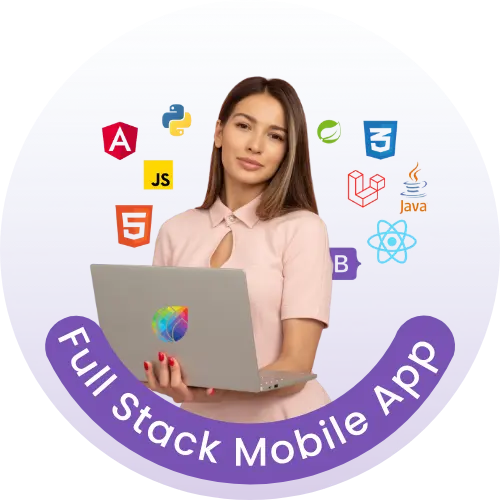
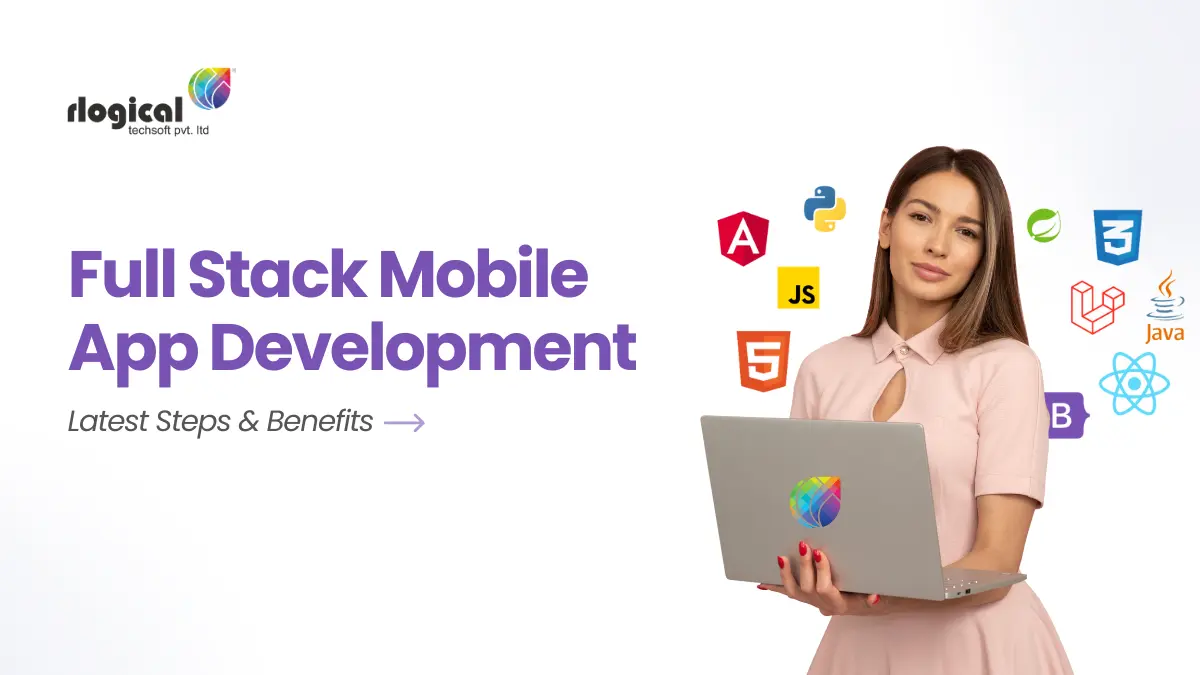
In addition to that, there are a few full-stack technologies that also get the AI-driven version. It makes new app development dynamic, feature-rich, and top-quality solutions. However, for a quick recap, first list the evergreen full-stack technologies.
This technology list gets integrated with APIs, frameworks, and other automated testing tools. Moreover, these have also brought the enhancement of the latest technological trends. Apart from these, tech leaders and entrepreneurs like you should be more interested in the beneficial points. Here is the list…
As the frontend and backend development commence and are cohesively maintained, the productivity will increase in a mobile app project. The single full stack developer is accountable for managing both the programming and API setup. Moreover, nowadays, various automated testing and debugging tools are also handy. Hence, developers can also incorporate automation into the development stages. All-in-all, the new-age full stack mobile app methodology boosts developers’ productivity.
For the latest driven mobile app development, full-stack technologies are wholesome solutions. Using this end-to-end tech and tools for full-stack, your mobile apps gain a competitive edge. Moreover, its ability to manage the front-end and backend programming in parallel prevents hiccups. From faster development to bug detection and troubleshooting errors, the whole full-stack app development is a streamlined process.
The next beneficial aspect is smooth third-party library integrations. No matter which full-stack framework you prefer, it offers quick integration with tools. You can make a reliable tool integration. From version control systems like Git to deployment tools such as Docker and Kubernetes, easy integration makes it all.
Furthermore, it also gets the payment, map, or other feature-driven integration. In short, full-stack apps won’t face any kind of tool incorporation during development. So, it’s a win-win for your app.
The security and privacy matters for business data and users’ transactions. It’s the ultimate fact that a mobile app’s end goal is to get maximum checkouts, i.e., conversions. Therefore, offering a seamless and secure environment to buyers or visitors is crucial. Moreover, full-stack developers have an edge in upgrading the app security measures. However, you should keep track of major things like government adherence and protection from cyber threats.
The latest and sort of evergreen technological trend, AI/ML development services are essential. Even the robustness of full-stack app development also demands AI-based support. Because it will smoothly enhance your programming aspect and app quality. In simple terms, your business app gets a competitive edge.
Here’s a step-by-step guide to building full stack apps from scratch. It will guide you through the robust processes.
Creating a full-stack application is a strategic process that blends user-centric design, robust development, and ongoing optimization. For CTOs, entrepreneurs, or product strategists, understanding each stage of development is key to delivering a high-performing, scalable solution. Let’s dig into it…
This foundational phase sets the tone for your entire project. It involves deep research, goal-setting, and strategic alignment.
Start by defining who your users are and what they need. You have to conduct user research to uncover pain points, preferences, and behaviors. This insight will guide your wireframes and feature prioritization.
Analyzing the industry competitors to understand industry standards, emerging trends, and gaps you can fill. This helps refine your value proposition and differentiate your app.
Use your research to establish measurable objectives. Therefore, these goals will further keep you informed about the roadmap, guide decision-making. Moreover, it will help track progress throughout development.
This is the second and user-interface phase transforms your vision into a functional one. Moreover, it is crucial for a user-friendly product.
A compelling user interface is essential for engagement. Collaborate with UI/UX designers to create a visually appealing and accessible experience tailored to your audience.
Develop an engaging prototype to visualize navigation and core features. Then, launch a Minimum Viable Product (MVP) to gather early feedback and validate your concept with real users and stakeholders.
Next, choose a suitable Software Development Lifecycle (SDLC) model—Agile, Waterfall, or Iterative; to structure your build. Your full-stack development team will handle client-side (frontend) and server-side (backend) programming, database setup, and API integrations.
Before going live, rigorous and automated testing ensures your app’s performance. So, you have to validate your app’s scalability.
You can easily engage QA specialists to run performance, unit, API, and security tests. Hence, this step helps identify bugs, improve stability, and ensure compliance with industry standards.
Once testing is complete, deploy your app to the chosen platforms. Well, it involves configuring servers, uploading files, and ensuring compatibility. So, it will be deployed across operating systems as a reliable app to be downloaded by users.
The post-launch services are that your app requires ongoing support to stay relevant and competitive.
Keep your app fresh with version updates, content enhancements, and feature upgrades. Furthermore, respond to user feedback and adapt to evolving market demands.
The maintenance isn’t just about fixing bugs; it’s about future-proofing your app. Therefore, your app can optimize performance, enhance security, and explore integrations that support growth.
With the effective AI, ML, and other tech advancements, full-stack mobile web development will have a vast scope of tech solutions. It will turn into a tech inclusion for a kind of project, from mobile apps, enterprise software, to a SaaS platform. Accordingly, the demand to hire full stack developers will flourish, with experience in diverse domains.
In addition to that, the innovation and unique web/mobile architecture will take center stage. An intuitive and structured app architecture is highly navigational to handle the user’s journey. You can enhance the impact of existing or traditional apps by transforming them into PWAs or other solutions. Moreover, the following bullet points explain the future trends quite transparently.
Now, you should get into hiring full-stack developers with future-edge. Well, that is a whole set of new things; you have to follow a rigorous process to get an ideal fit.
Bringing the right full-stack developer on board decides your project’s success and failure. Here’s a step-by-step guide to streamline the hiring process. This guarantees you a perfect fit.
Before diving into job boards or interviews, take a moment to clarify what you really need. Get your notepad and write down the questions below;
Refining these answers will help you prioritize must-haves vs. nice-to-haves and shape your hiring strategy.
Use your requirements to build a standout job description (JD). Research similar roles to understand market expectations, then tailor your JD to highlight:
A well-written JD attracts the right candidates and filters out mismatches early. You can directly hire a full-stack developer without getting into these hassles.
Once your JD is ready, publish it on trusted talent marketplaces. You can also reach out directly to promising profiles with personalized proposals.
As you start receiving applications, evaluate each one carefully. Look for;
Moreover, the shortlisted candidates who align with your goals are ready for an interview. So, invite them for interviews to assess both technical and soft skills.
After initial interviews, review and rate the candidates based on;
So, this helps you narrow down to the top contenders for deeper evaluation.
Ask shortlisted candidates to share their work samples or complete a small task. This gives you insight into;
If needed, consult a technical expert to help assess their work objectively. It will give better depth.
Once you’ve identified your ideal full-stack developer(s), schedule a final round to align on;
Also, encourage open discussion to ensure mutual clarity and build a strong foundation for teamwork.
Hiring full-stack developers doesn’t have to be overwhelming. With a structured approach, you’ll be well on your way to building a high-performing development team. Rlogical Techsoft has a vast range of full-stack experts with diverse technical knowledge. Connect now for your business idea and get innovative solutions!
There is no fixed cost of full-stack app development. It all relies on your project timeline and scope. You will get affordable developers on an hourly basis for the development tasks.
Full-stack development is a powerhouse of technologies. To make it simple for you, the categorization below will help which development stage needs what tech stack, so here you go.
Frontend – HTML, CSS, JavaScript, React.js, jQuery
Backend – PHP, Ruby on Rails, NodeJS, and TypeScript
Database – MongoDB, MySQL, PostgreSQL
Frameworks – Laravel, Angular, Express, NextJS, Django
APIs – RESTful API, SOAP API integration, JSON & XML Parsing
Jatin Panchal is the Founder & Managing Director at Rlogical Techsoft Pvt. Ltd. For more than a decade, he has been fostering the organization's growth in the IT horizons. He has always bestowed personalized approaches on .NET, PHP, Flutter, and Full-Stack web development projects. From startups to large enterprises, he has empowered them to accomplish business goals. By delivering successful industry-driven solutions, he is encouraging the capability of AI, ML, blockchain, and IoT into custom websites and hybrid mobile applications.